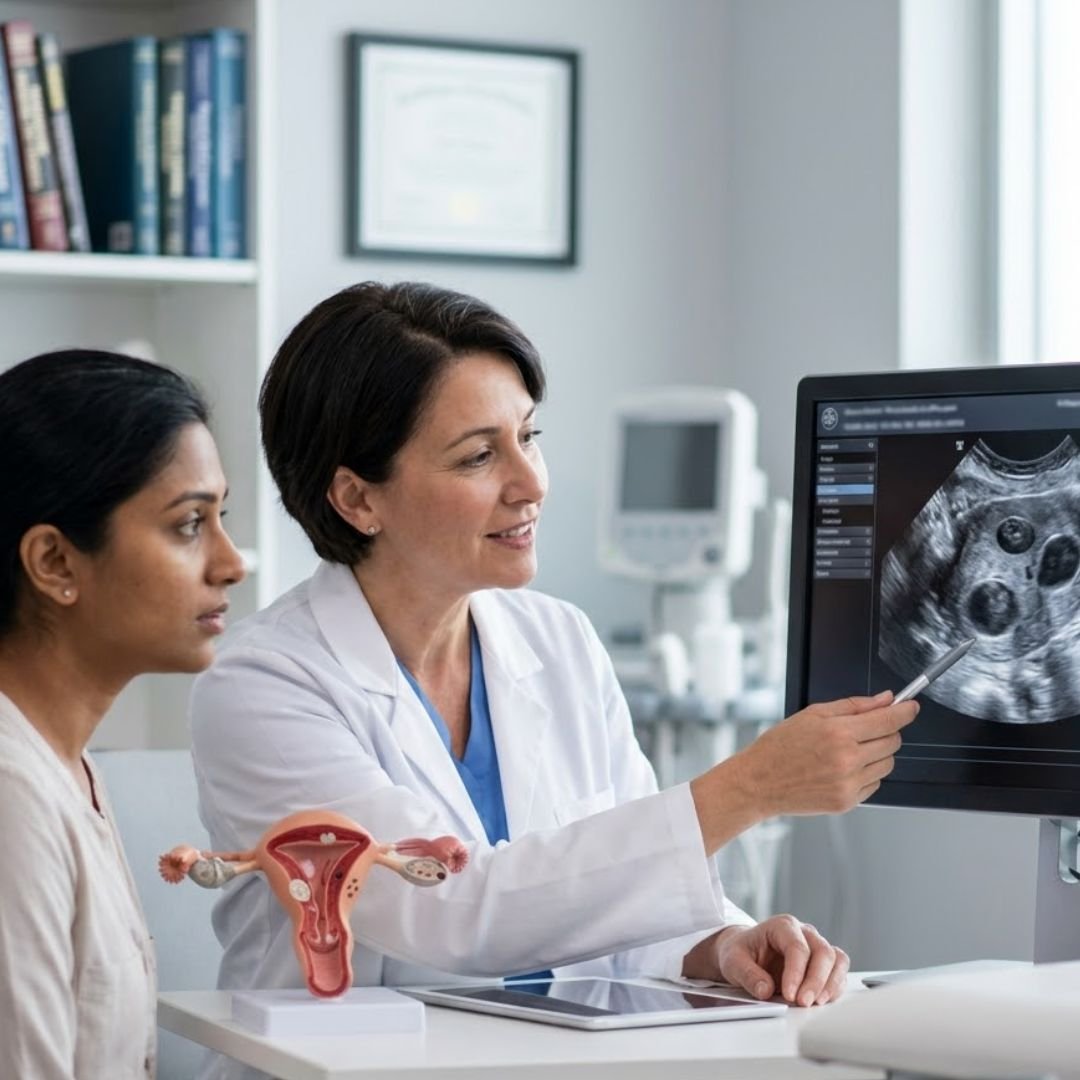
Fibroid Treatment
WOMEN'S HEALTH

Fibroid Treatment

Personalized care and treatment options designed around your individual fibroid-related needs.

Fibroid treatment focuses on managing symptoms and addressing the effects of uterine fibroids according to their size, location, symptoms and individual healthcare needs.

Your treatment may include evaluation of symptoms, medical history, appropriate investigations and discussion of suitable treatment options when clinically appropriate.

Personalized Treatment
Symptom Management
Fibroid Evaluation
Individual Care Guidance
Book Consultation
Fibroid Symptoms

Fibroids may cause different symptoms depending on their size, location and individual circumstances.

  • Heavy menstrual bleeding
  • Painful periods
  • Pelvic pressure
  • Pelvic discomfort
  • Abdominal fullness
Fibroid Evaluation

Evaluation helps understand the size, location and characteristics of fibroids and their effect on your health.

  • Medical history review
  • Symptom assessment
  • Pelvic examination
  • Imaging investigations
  • Individual treatment planning
Treatment Approach

Treatment is considered according to symptoms, fibroid characteristics and individual healthcare needs.

  • Symptom management
  • Medical treatment
  • Monitoring when appropriate
  • Appropriate procedures
  • Follow-up guidance
FIBROID TREATMENT FAQ

Frequently Asked Questions

Find answers to common questions about fibroids, symptoms, evaluation and treatment.

Uterine fibroids are growths that develop in or around the uterus. Their size, location and symptoms can vary from person to person.

Fibroids may be associated with heavy menstrual bleeding, painful periods, pelvic pressure, pelvic discomfort or abdominal fullness. Some people may have no noticeable symptoms.

Evaluation may include a review of symptoms and medical history, physical examination and appropriate imaging or other investigations to understand the size and location of the fibroids.

You may consider consultation when fibroids are associated with heavy menstrual bleeding, painful periods, pelvic discomfort, pressure or other persistent symptoms that affect your daily life.

Not every fibroid requires treatment. The appropriate approach depends on factors such as symptoms, fibroid size, location and individual healthcare needs. Your doctor can recommend suitable management after evaluation.

Treatment options depend on your symptoms, fibroid characteristics and individual healthcare needs. Depending on the situation, management may include observation, medical treatment or appropriate procedures.